
Insights from MEDLIFE2025: How climate shocks facilitate mosquito breeding and potential malaria reintroduction
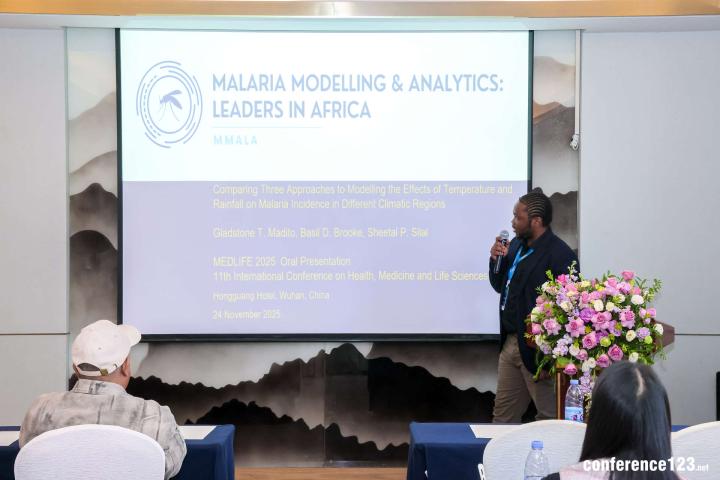
The 11th International Conference on Health, Medicine and Life Sciences organized by MEDLIFE2025 was recently held in Wuhan, China in November 23-25, 2025. This conference was held in conjunction with the 12th International Conference on Biology and Life Sciences. Mr. Gladstone Madito, who is part of MASHA’s Malaria Modelling and Analytics: Leaders in Africa (MMALA) PhD programme, was supported by The UCT Max & Lillie Sonnenberg Doctoral Travel Grant to give an oral presentation of his research comparing different approaches to modelling the effects of weather on malaria transmission in various climates.
Gladstone’s study investigates how temperature and rainfall facilitate the development of mosquitoes and create breeding sites. This study shows that models targeting key aspects of transmission suggest that preventing mosquito biting or reducing adult populations through vector control can be effective at reducing malaria incidence. Models accounting for mosquito development led to extended periods of transmission in warmer climates, while ecological models showed that the conducive environment created by warmer temperatures following periods of rainfall posed the risk of outbreaks, specifically in Subtropical regions.
Gladstone remarked in closing his presentation that “extreme weather events such as flooding or droughts have the potential to create environmental conditions that promote mosquito breeding and biting, increasing the risk of malaria reintroduction in areas that have previously achieved elimination.”
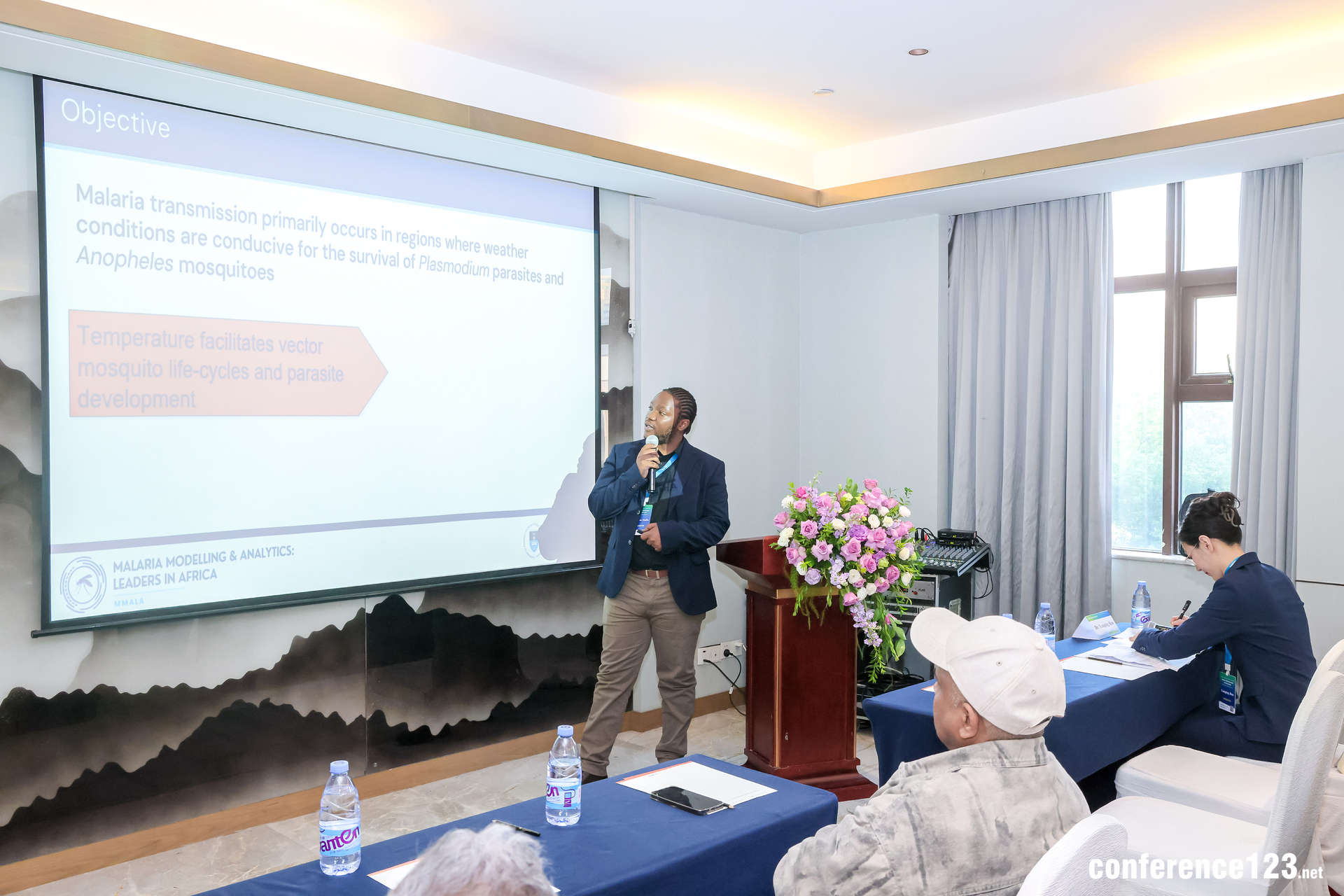
Further analysis showed that sustained vector control significantly reduced the incidence of malaria, even in the occurrence of these extreme events, and in some cases resulted in zero transmission. However, lower vector control coverage was associated with increased risk of transmission, highlighting the need for not only continued vector surveillance but vector control capacity in areas that have eliminated malaria to ensure effective response to outbreaks due to changing weather conditions, particularly in the context of climate change.
The results of this comparative study form the basis for Gladstone’s PhD thesis developing a framework for evaluating the health economic impact of switching insecticides used for household spraying, to inform operational strategies for vector control in the Limpopo province of South Africa.