
Health RADAR Goes Live!

Health RADAR Goes Live!
Supporting Responsible Access to Data for Climate-Sensitive Diseases
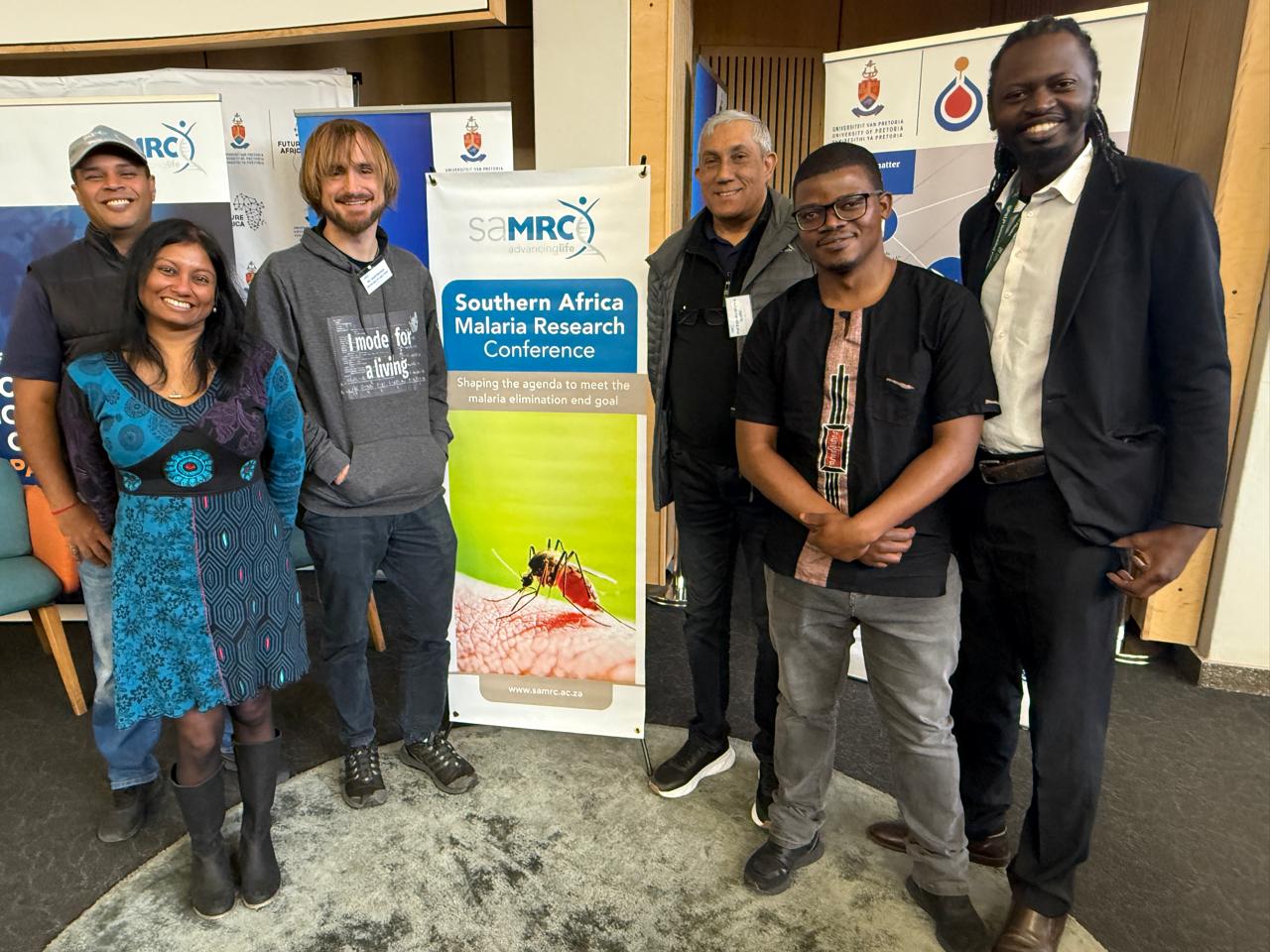
The 10th Southern Africa Malaria Research Conference, hosted by the SAMRC Malaria Research Group (MRG), brought together researchers, programme managers, and policymakers under the theme “Shaping the agenda to meet the malaria elimination end goal.” The conference provided a platform for regional stakeholders to engage on the persistent challenges and emerging innovations in malaria control, with a strong emphasis on data-driven decision-making, sustainable intervention strategies, and cross-border collaboration. The conference aligns with MASHA’s core strengths and pillars aiming to raise the awareness of Mathematical Modelling as tools that can innovate our way faster to malaria elimination amongst policy makers and in attendance from MASHA.
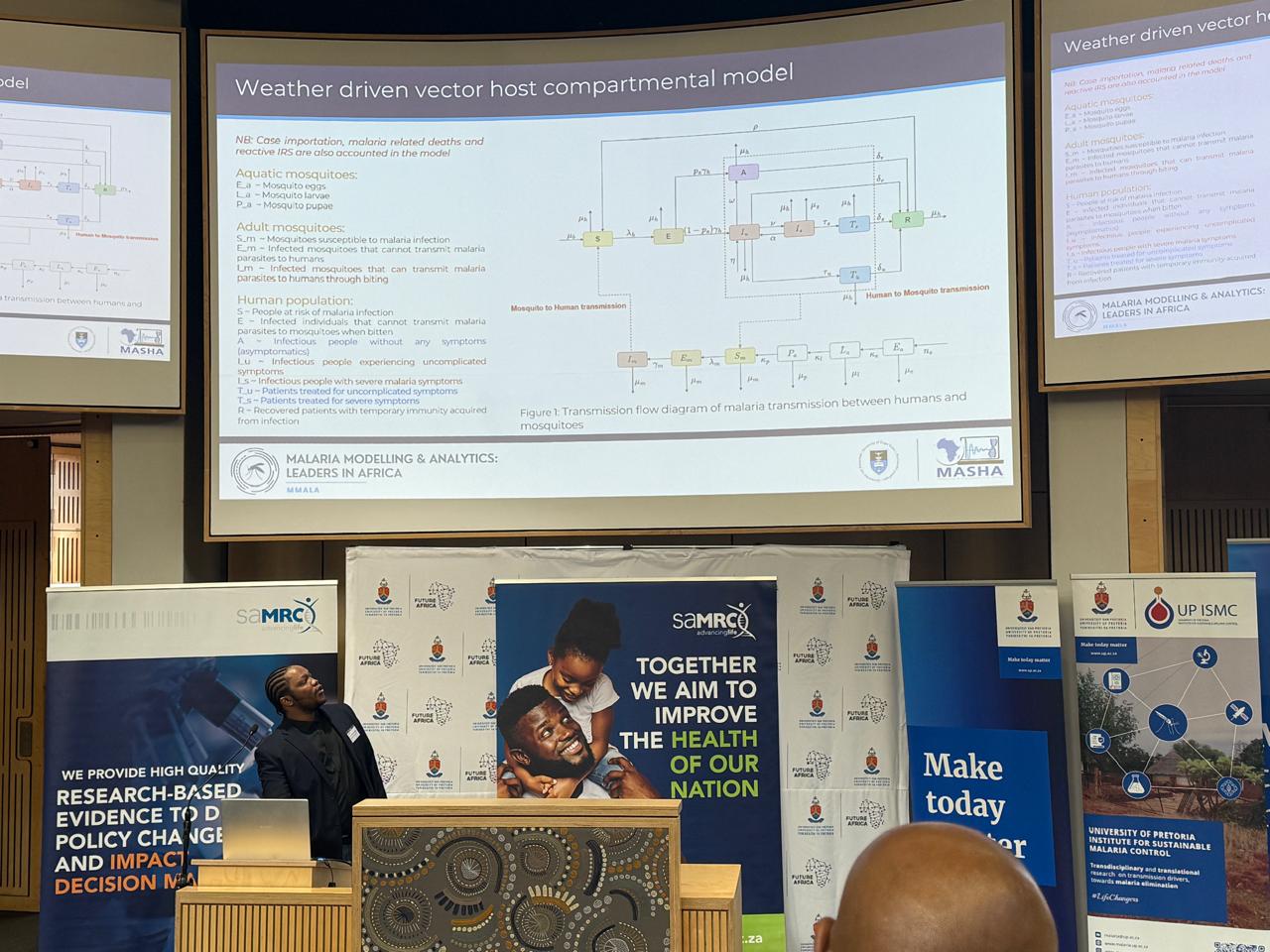
Contributing to these discussions, MASHA PhD student Gladstone Madito delivered an oral presentation on the transition away from DDT-based indoor residual spraying (IRS) toward next-generation vector control tools. Using a spatially explicit transmission model, the study evaluated the potential impact of alternative insecticides by assessing differences in coverage, and effectiveness in reducing malaria incidence under climate-sensitive scenarios. Gladstones presentation was a key spotlight and elicited positive remarks from the National Malaria Programme in South Africa on how his research address relevant policy questions. His presentation focused on key issues such as operational sustainability, resistance management, and the need for innovative, context-specific interventions to achieve malaria elimination targets which formed thematic discussion points throughout the conference.
In collaboration with the Climate System Analysis Group (CSAG), South Africa Medical Research Council Clinton Health Access Initiative the Modelling and Simulation Hub, Africa (MASHA) officially launched Health RADAR (Responsible Access to Data for Analysis and Research), a Wellcome Trust funded digital platform designed to support modelling of climate-sensitive infectious diseases (CSIDs).

Health RADAR responds to the growing demand for high-quality, integrated data that can inform planning and forecasting in the context of climate variability and disease burden. The platform provides access to data sources spanning health, climate, vector ecology, demographics, and socioeconomics the nexus to CSID data needs. It aims to facilitate access to harmonised, context-sensitive data for CSID modelling; enable the integration of climate and environmental variability into decision-support tools. Additionally, the Health RADAR promotes ethical data governance and use by outlining the data source(s), providing visualisations, and modelling use cases, and their respective R codes/scripts.
Initially focused on malaria, chikungunya, dengue and cholera in southern Africa, the platform is designed to expand across regions and CSID areas, offering a sustainable, open-access resource for researchers, analysts, and health programme implementers. MASHA continues to collaborate with research institutions, national malaria programmes, and regional networks to strengthen the use of modelling, analytics, and climate-informed strategies in public health. The official launch of Health RADAR, alongside the contributions shared at the SAMRC conference, reflects a shared commitment to advancing evidence-based, locally informed approaches to disease elimination across the region.