- Marks, R.A., Lovell, J.T., Carey, S.B., Van Der Pas, L., Chimukuche, N.M., Brůna, T., Plott, C., Webber, J., Lipzen, A., Yan, J. and Bauer, D., 2026. The architecture of resilience: a genome assembly of Myrothamnus flabellifolia sheds light on desiccation tolerance and sex determination. New Phytologist, 249(2), pp.1063-1084.
- Baluku, E., van der Pas, L., Hilhorst, H.W. and Farrant, J.M., 2025. Metabolite profiling of the resurrection grass Eragrostis nindensis during desiccation and recovery. Plants, 14(4), p.531.
- Madden, C.F., Williams, B., Mundree, S., Acket, S., Ruelland, E., Hilhorst, H.W. and Farrant, J.M., 2025. Defying Death: A Multi-Omics Approach to Understanding Desiccation Tolerance and Senescence in Eragrostis nindensis. Plants, 14(21), p.3360.
- Molefe, P.F., Ghasemishahrestani, Z., Mbele, M., Khanyile, S., Farrant, J., Khumalo, N.P. and Bayat, A., 2025. African medicinal plants in cutaneous wound repair: a comprehensive analysis of the role of phytochemicals. International Wound Journal, 22(8), p.e70742.
- Tebele, S.M., Marks, R.A. and Farrant, J.M., 2025. Microbial survival strategies in desiccated roots of Myrothamnus flabellifolia. Frontiers in Microbiology, 16, p.1560114.
- Marks, R.A., Delgado, P., Makonya, G.M., Cooper, K., VanBuren, R. and Farrant, J.M., 2024. Higher order polyploids exhibit enhanced desiccation tolerance in the grass Microchloa caffra. Journal of Experimental Botany, 75(11), pp.3612-3623.
- Tadele, Z., Farrant, J.M., Bull, S.E. and Mumm, R.H., 2024. Orphan crops: breeding and biotechnology for sustainable agriculture, food and nutrition. Frontiers in Plant Science, 14, p.1349215.
- Tebele, S.M., Marks, R.A. and Farrant, J.M., 2024. Exploring the root-associated microbiome of the resurrection plant Myrothamnus flabellifolia. Plant and Soil, 500(1), pp.53-68.
- Dace, H.J., Adetunji, A.E., Moore, J.P., Farrant, J.M. and Hilhorst, H.W., 2023. A review of the role of metabolites in vegetative desiccation tolerance of angiosperms. Current Opinion in Plant Biology, 75, p.102410.
- Dace, H.J., Reus, R., Ricco, C.R., Hall, R., Farrant, J.M. and Hilhorst, H.W., 2023. A horizontal view of primary metabolomes in vegetative desiccation tolerance. Physiologia Plantarum, 175(6), p.e14109.
- Marks, R.A., Amézquita, E.J., Percival, S., Rougon-Cardoso, A., Chibici-Revneanu, C., Tebele, S.M., Farrant, J.M., Chitwood, D.H. and VanBuren, R., 2023. A critical analysis of plant science literature reveals ongoing inequities. Proceedings of the National Academy of Sciences, 120(10), p.e2217564120.
- Marks, R.A. and Farrant, J.M., 2023. Women in plant biotechnology 2022. Frontiers in Plant Science, 14, p.1292441.
- Moore, J.P., Vicré, M., Nguema-Ona, E., Driouich, A. and Farrant, J.M., 2023. Drying Out Walls: How Do the Cell Walls of Resurrection Plants Survive Desiccation?. In Plant Cell Walls (pp. 441-451). CRC Press.
- Bentley, J., Liebrich, P.Y., Farrant, J.M., Mandishonha, M., Reddy, A. and Rafudeen, M.S., 2022. Metabolomic analysis of the roots and shoots of tomato seedlings treated with the commercial seaweed-derived biostimulant Afrikelp. South African Journal of Botany, 147, pp.646-651.
- Bentley, J., Olsen, E.K., Moore, J.P. and Farrant, J.M., 2020. The phenolic profile extracted from the desiccation-tolerant medicinal shrub Myrothamnus flabellifolia using Natural Deep Eutectic Solvents varies according to the solvation conditions. Phytochemistry, 173, p.112323.
- Djighaly, P.I., Diagne, N., Ngom, D., Cooper, K., Pignoly, S., Hocher, V., Farrant, J.M. and Svistoonoff, S., 2022. Effect of symbiotic associations with Frankia and arbuscular mycorrhizal fungi on antioxidant activity and cell ultrastructure in C. equisetifolia and C. obesa under salt stress. Journal of Forest Research, 27(2), pp.117-127.
- Farrant, J.M. and Hilhorst, H., 2022. Crops for dry environments. Current opinion in biotechnology, 74, pp.84-91.
- Marks, R.A., Mbobe, M., Greyling, M., Pretorius, J., McLetchie, D.N., VanBuren, R. and Farrant, J.M., 2022. Variability in functional traits along an environmental gradient in the South African resurrection plant Myrothamnus flabellifolia. Plants, 11(10), p.1332.
- du Toit, S.F., Bentley, J. and Farrant, J.M., 2021. NADES formation in vegetative desiccation tolerance: prospects and challenges. Advances in Botanical Research, 97, pp.225-252.
- Farrant, J.M. and Hilhorst, H.W., 2021. What is dry? Exploring metabolism and molecular mobility at extremely low water contents. Journal of Experimental Botany, 72(5), pp.1507-1510.
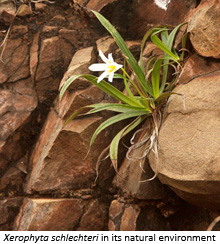
- Gabier, H., Tabb, D.L., Farrant, J.M. and Rafudeen, M.S., 2021. A label-free proteomic and complementary metabolomic analysis of leaves of the resurrection plant Xerophyta schlechteri during dehydration. Life, 11(11), p.1242.
- Marks, R.A., Farrant, J.M., Nicholas McLetchie, D. and VanBuren, R., 2021. Unexplored dimensions of variability in vegetative desiccation tolerance. American Journal of Botany, 108(2), pp.346-358.
- Nadal, M., Brodribb, T.J., Fernández‐Marín, B., García‐Plazaola, J.I., Arzac, M.I., López‐Pozo, M., Perera‐Castro, A.V., Gulías, J., Flexas, J. and Farrant, J.M., 2021. Differences in biochemical, gas exchange and hydraulic response to water stress in desiccation tolerant and sensitive fronds of the fern Anemia caffrorum. New Phytologist, 231(4), pp.1415-1430.
- Nadal, M., Perera-Castro, A.V., Gulías, J., Farrant, J.M. and Flexas, J., 2021. Resurrection plants optimize photosynthesis despite very thick cell walls by means of chloroplast distribution. Journal of Experimental Botany, 72(7), pp.2600-2610.
- Bentley, J. and Farrant, J.M., 2020. Field and acclimated metabolomes of a resurrection plant suggest strong environmental regulation in the extreme end of the species’ range. South African Journal of Botany, 135, pp.127-136.
- Djighaly, P.I., Ngom, D., Diagne, N., Fall, D., Ngom, M., Diouf, D., Hocher, V., Laplaze, L., Champion, A., Farrant, J.M. and Svistoonoff, S., 2020. Effect of Casuarina plantations inoculated with arbuscular mycorrhizal fungi and Frankia on the diversity of herbaceous vegetation in saline environments in Senegal. Diversity, 12(8), p.293.
- Farrant, J.M., Moore, J.P. and Hilhorst, H.W., 2020. Unifying insights into the desiccation tolerance mechanisms of resurrection plants and seeds. Frontiers in Plant Science, 11, p.1089.
- Oliver, M.J., Farrant, J.M., Hilhorst, H.W., Mundree, S., Williams, B. and Bewley, J.D., 2020. Desiccation tolerance: avoiding cellular damage during drying and rehydration. Annual review of plant biology, 71(1), pp.435-460.
- Pardo, J., Man Wai, C., Chay, H., Madden, C.F., Hilhorst, H.W., Farrant, J.M. and VanBuren, R., 2020. Intertwined signatures of desiccation and drought tolerance in grasses. Proceedings of the National Academy of Sciences, 117(18), pp.10079-10088.
- Tebele, S.M., Marks, R.A. and Farrant, J.M., 2021. Two decades of desiccation biology: a systematic review of the best studied angiosperm resurrection plants. Plants, 10(12), p.2784.
- Artur, M.A.S., Rienstra, J., Dennis, T.J., Farrant, J.M., Ligterink, W. and Hilhorst, H., 2019. Structural plasticity of intrinsically disordered LEA proteins from Xerophyta schlechteri provides protection in vitro and in vivo. Frontiers in Plant Science, 10, p.1272.
- Bentley, J., Moore, J.P. and Farrant, J.M., 2019. Metabolomics as a complement to phylogenetics for assessing intraspecific boundaries in the desiccation-tolerant medicinal shrub Myrothamnus flabellifolia (Myrothamnaceae). Phytochemistry, 159, pp.127-136.
- Bentley, J., Moore, J.P. and Farrant, J.M., 2019. Metabolomic profiling of the desiccation-tolerant medicinal shrub Myrothamnus flabellifolia indicates phenolic variability across its natural habitat: Implications for tea and cosmetics production. Molecules, 24(7), p.1240.
- Charuvi, D., Nevo, R., Aviv-Sharon, E., Gal, A., Kiss, V., Shimoni, E., Farrant, J.M., Kirchhoff, H. and Reich, Z., 2019. Chloroplast breakdown during dehydration of a homoiochlorophyllous resurrection plant proceeds via senescence-like processes. Environmental and Experimental Botany, 157, pp.100-111.
- Costa, M.C.D. and Farrant, J.M., 2019. Plant resistance to abiotic stresses. Plants, 8(12), p.553.
- López‐Pozo, M., Flexas, J., Gulías, J., Carriquí, M., Nadal, M., Perera‐Castro, A.V., Clemente‐Moreno, M.J., Gago, J., Núñez‐Olivera, E., Martínez‐Abaigar, J. and Hernández, A., 2019. A field portable method for the semi‐quantitative estimation of dehydration tolerance of photosynthetic tissues across distantly related land plants. Physiologia Plantarum, 167(4), pp.540-555.
- Nyau, V., Mwelwa-Zgambo, L., Chirwa-Moonga, T., Nthani, D., Prakash, S., Rodrigues, J. and Farrant, J., 2019. Some nutritional and physical properties of different Zambian market classes of Bambara groundnut (Vigna subterranea). Journal of Food Research, 9(1), p.34.
- Radermacher, A.L., du Toit, S.F. and Farrant, J.M., 2019. Desiccation-driven senescence in the resurrection plant Xerophyta schlechteri (Baker) NL Menezes: comparison of anatomical, ultrastructural, and metabolic responses between senescent and non-senescent tissues. Frontiers in Plant Science, 10, p.1396.
- Silva Artur, M.A., Costa, M.C.D., Farrant, J.M. and Hilhorst, H.W., 2019. Genome-level responses to the environment: plant desiccation tolerance. Emerging Topics in Life Sciences, 3(2), pp.153-163.
- Hilhorst, H.W., Costa, M.C.D. and Farrant, J.M., 2018. A footprint of plant desiccation tolerance. Does it exist? Molecular plant, 11(8), pp.1003-1005.
- Hilhorst, H.W. and Farrant, J.M., 2018. Plant desiccation tolerance: a survival strategy with exceptional prospects for climate‐smart agriculture. Annual Plant Reviews Online, pp.327-354.
- Tshabuse, F., Farrant, J.M., Humbert, L., Moura, D., Rainteau, D., Espinasse, C., Idrissi, A., Merlier, F., Acket, S., Rafudeen, M.S. and Thomasset, B., 2018. Glycerolipid analysis during desiccation and recovery of the resurrection plant Xerophyta humilis (Bak) Dur and Schinz. Plant, Cell & Environment, 41(3), pp.533-547.
Google scholar profile (full list of publications) | |